StrategyUpdated 22 Jul 20262 min read
Odds Movement
Prices move because money arrives or information does: a lineup lands, a key striker is out, the pitch is waterlogged, or a sharp book prices first and everyone else follows.
The useful skill is not spotting that a price moved. It is knowing how much of a revision that move actually represents.
Two numbers, one move#
A price falling from 3.00 to 2.70 is:
- a 10% price move — the number itself fell a tenth
- a 3.7 percentage-point probability shift — from 33.3% to 37.0%
Both describe the same event, and only the second tells you what the market changed its mind about.
The market moved this from a 33.3% chance to a 37.0% chance — before the bookmaker's margin, which inflates both.
How far the number fell.
What the market changed its mind by.
Beat the close, or missed it.
Those first two numbers describe the same move and never match — the price move is always the larger. Quoting it as though it were the change in probability is the most common way movement gets oversold.
They differ because implied probability is the reciprocal of the price, so an identical proportional move means less and less as prices lengthen. Ten percent off a 1.50 favourite is a much larger revision than ten percent off a 10.00 outsider. Whenever a dramatic percentage is attached to a drifting long shot, this is why — and converting it first is the fastest way to stop being impressed.
Both readings also ignore the bookmaker's margin, which inflates every implied probability. Strip it out before treating either as the market's genuine estimate.
Why following steam disappoints#
The logic sounds airtight: sharp money moved this price, sharp money is informed, so follow it. The flaw is timing. By the time the move is visible, the price that carried the value is gone, and you are taking the worse side of the very revision you are citing as evidence.
That leaves you paying for information that has already been priced. Steam-chasing is not irrational so much as late — and lateness is precisely what the market charges for.
The version that works#
Turn it around. Instead of using movement to pick bets, use it to grade them.
If the prices you take are consistently better than where the market settles, you are finding value before the market does. That is closing line value, and it is the closest thing to a leading indicator of skill that betting offers — because it measures your judgement against the sharpest available estimate, and it accumulates a verdict far faster than profit and loss does. Sample size explains why waiting for ROI to tell you the same thing takes years.
In Tofiko#
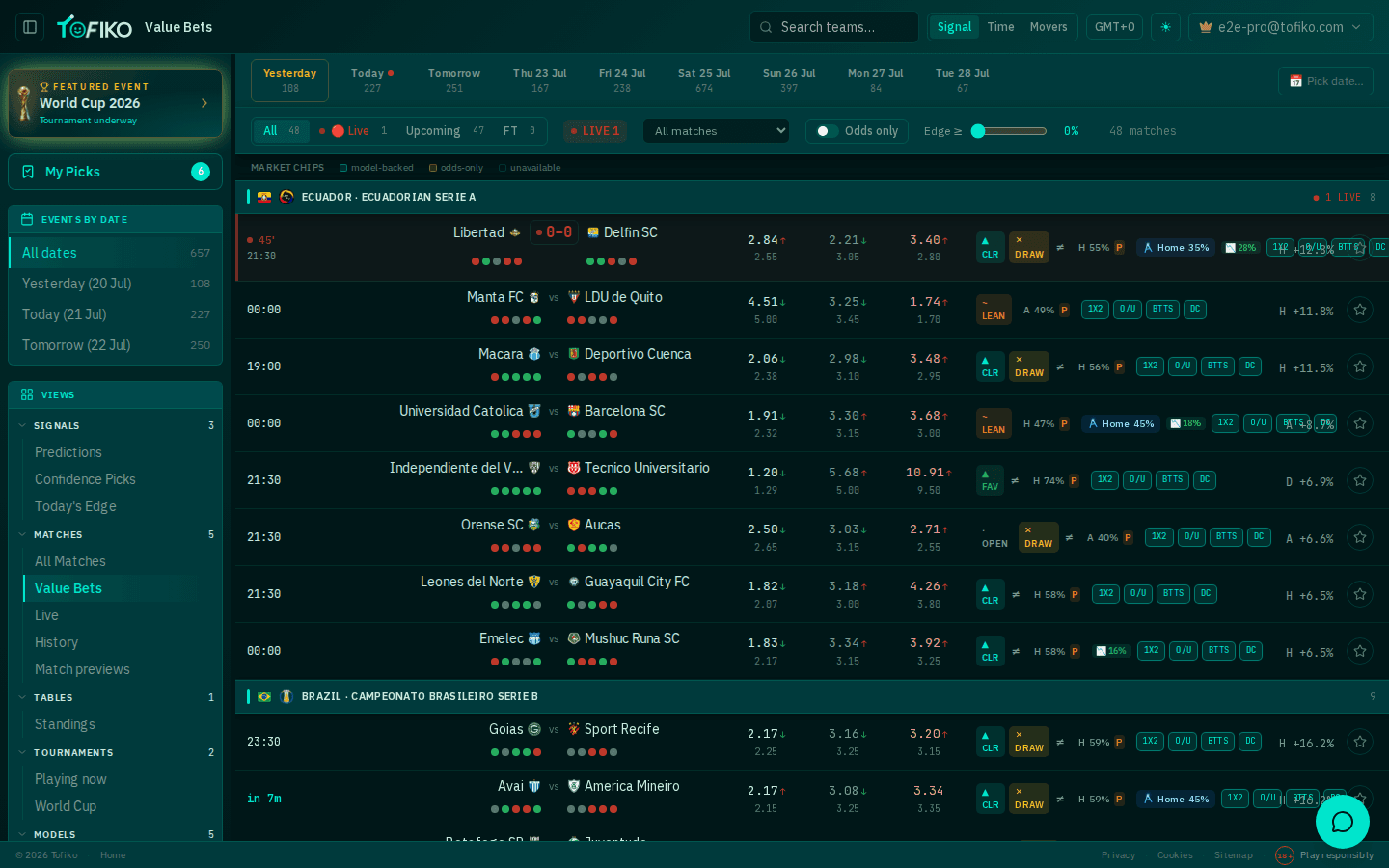
Rows whose price is shortening sharply carry a small ↓ marker in the match list, and clicking a price opens the movement history behind it — the current price against where it opened.
To compare prices across bookmakers at one moment rather than over time, that is line shopping, and it is the single highest-return habit available to a recreational bettor.
Related
- Closing Line Value: The Only Scoreboard That Answers in a Season
- Line Shopping: The Edge That Needs No Forecasting Skill
- Fair Odds: What the Bookmaker's Margin Hides
- What Is Value Betting? A Plain-English Guide
- Expected Value in Betting: The Number That Decides Everything
- Sample Size: How Many Bets Before You Know You Have an Edge
- Odds Movement Calculator — What a Price Move Really Means
- Closing Line Value Calculator — Grade a Bet Without Waiting for the Result
- Fair Odds Calculator — Remove the Bookmaker Margin from Any 1X2 Book
- Odds Converter — Decimal, Fractional, American & Implied Probability
Frequently asked questions
Why do football odds move?
Because money arrives or information does. Team news, injuries, weather and lineup announcements move prices, as does weight of money — and bookmakers copy moves from the sharper books that price first.
Does a shortening price mean a bet is good?
It means the market now rates the outcome more likely than it did. That is evidence about the outcome, not about your bet — and by the time you see the move, the better price has gone.
How do you convert an odds move to a probability change?
Take 1 ÷ odds at each price and subtract. From 3.00 to 2.70 is 33.3% to 37.0%, a 3.7 percentage-point shift, even though the price itself moved 10%.
Should I follow steam moves?
Chasing a move after it has happened means taking the worse price by definition. Movement is far more useful as a scorecard for your own bets — via closing line value — than as a signal to copy.