usingUpdated 22 Jul 20263 min read
Standings
Standings holds the league tables, under Tables in the left sidebar or directly at /standings. Pick a competition and you get the table for the current season.
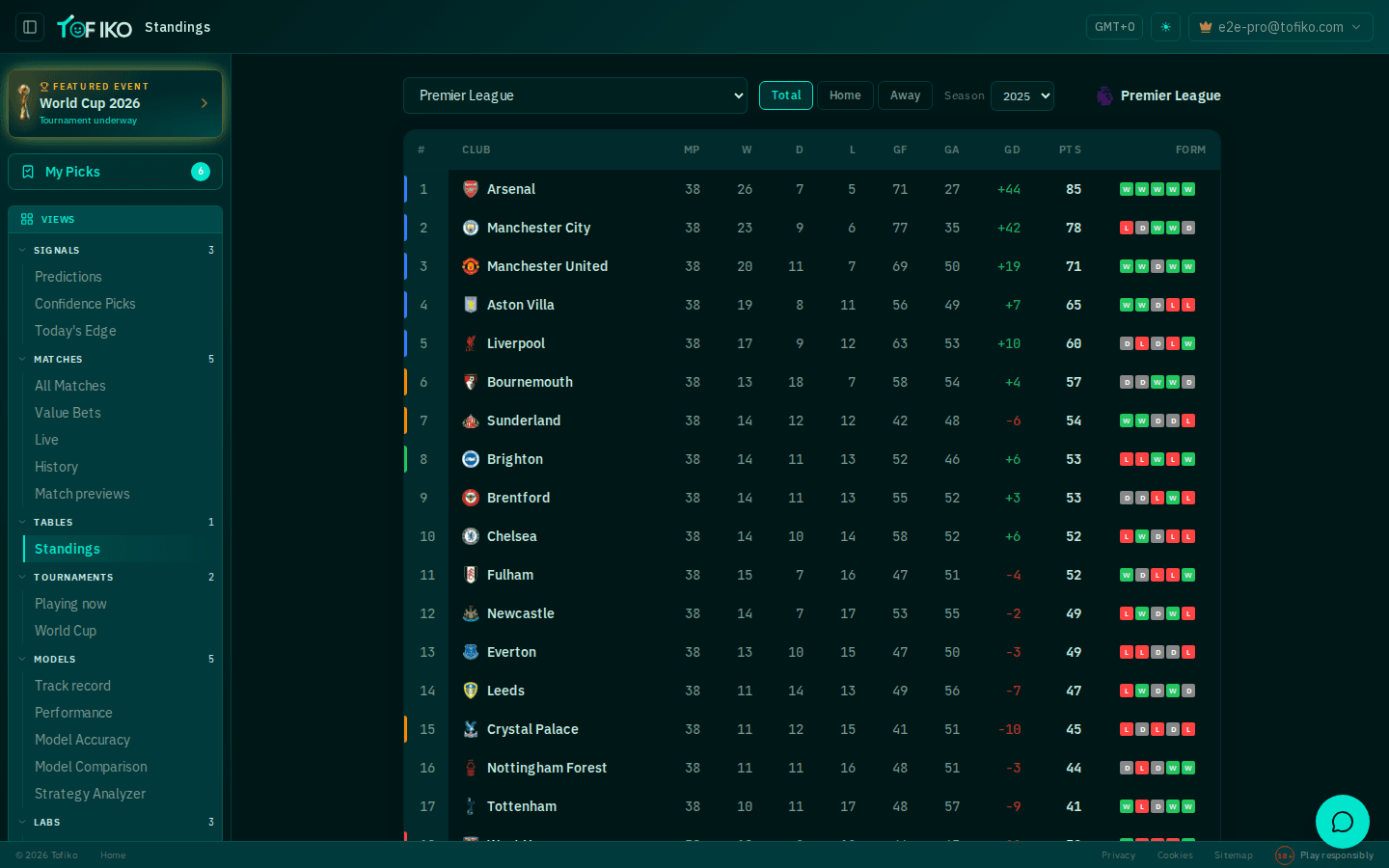
What it covers#
Coverage follows the same data sources as the rest of the site: 7msport supplies the primary fixture data, with a second licensed provider behind the World Cup pages. If a competition does not appear in All Matches, it will not have a table here either.
Two things regularly surprise people:
- Between seasons a table can look wrong or empty. In June and July most northern-hemisphere leagues are between campaigns. What you are seeing is a season that has ended or one that has not begun.
- Not every covered league is modelled. A fixture can have prices without a model probability. That is flagged as odds-only in the market chips legend — see troubleshooting for the other common empty states.
How to use a table properly#
A league position is context, not a forecast. Used well, it answers questions the odds cannot:
- Is this fixture meaningful? A mid-table side in May with nothing to play for is a different proposition from the same side in October.
- What is at stake? Title races, promotion pushes and relegation fights change how sides set up.
- Is the gap real or recent? A side sitting third after a hot month is not the same as a side that has been third all season.
Then take that context to the fixture itself. The match preview pages put the model's probability next to the market price, which is the comparison that actually decides a bet.
A table records results, and results contain a lot of luck — a deflected winner and a disallowed goal are worth three points between them. That is why underlying-performance measures exist: expected goals describes the chances a side actually created and conceded, which tends to say more about the next match than the points column does. A team can sit fourth while playing like tenth, and the table will be the last thing to notice.
A three-step routine#
- Find the fixture on All Matches and note the two sides.
- Open Standings for that competition and read the context: position, and what each side is playing for.
- Go back to the fixture, or its preview, and compare the model probability with the price.
The trap to avoid#
The most common misuse of a table is treating a big gap as a betting reason. It is not. Everyone can see the table, including the people setting the price, so the gap is already in the odds. Backing the better-placed side at a short price because the table says so is paying for information that is free.
Tofiko is blunt about how hard beating that price is: the performance page reports the market currently ahead of the models on 1X2, and 0 of 17 league groups passing the profitability gate. If the models with goal-level data are behind the market, a league position on its own is certainly not ahead of it.
Use the table to understand a fixture. Use the price and the probability to decide about it.
Related
Frequently asked questions
Where do I find the standings?
Under Tables in the left sidebar, or directly at /standings. Pick the competition you want and the table for the current season is shown.
Why is a league missing or its table empty?
Coverage follows the same data sources as the rest of the site, so a competition Tofiko has no fixtures for will have no table either. In June and July many leagues are between campaigns, so a table may be last season's final state or not yet started.
Do the models use league position?
Not directly as a ranking. Tofiko's models work from goal rates and team strength — Poisson, Dixon-Coles and Elo blended into an ensemble — rather than from where a side sits in the table.
Is a top-of-the-table side a good bet against a bottom side?
Not on its own. The market prices that gap into the odds long before you see it. A table tells you what has already happened; the only question worth asking is whether the price is generous relative to the probability.